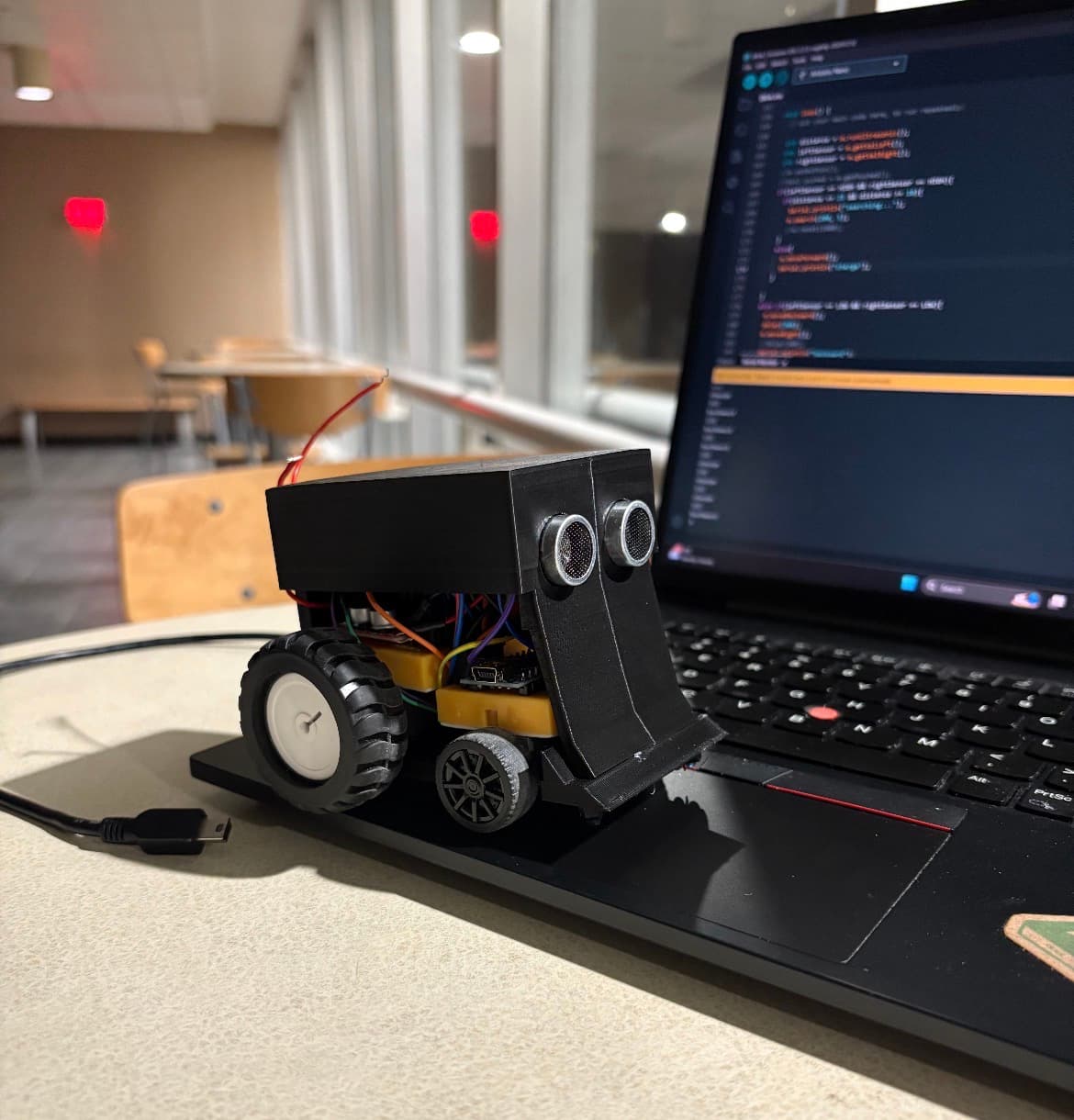
SumoBots
An autonomous competition robot combining a lightweight CAD chassis with a sub-10 ms embedded C/C++ control loop. The design won Best Movement Algorithm at the 2025 McMaster SumoBots competition.
Mechanical Design & Embedded Controls
October 2024
Student robotics competition team
~20%
Chassis Weight Reduction
Controls + Sensing
Core Focus
Autonomous Competition Robot
System Type
Overview
An autonomous competition robot combining a lightweight CAD chassis with a sub-10 ms embedded C/C++ control loop. The design won Best Movement Algorithm at the 2025 McMaster SumoBots competition.
Problem
The team needed a robot capable of rapidly sensing opponents, making control decisions, and performing reliably in a physically constrained competitive setting.
Objectives
- Detect and react quickly to opponents
- Build robust autonomous behavior
- Balance sensing, control quality, and physical performance
- Iterate quickly under competition deadlines
System Architecture
An embedded control system integrates sensors, decision logic, and control behavior into a competitive robot platform optimized for detection, maneuvering, and contact.
Hardware
- competition robot platform
- onboard sensors
- chassis
- motor/drive hardware
Software
- C++
- embedded logic
Algorithms / Processing
- sensor fusion
- autonomous behavior logic
Key Decisions and Tradeoffs
- Balanced responsiveness with control stability
- Worked within weight and chassis constraints
- Tuned behavior for real-world contact and uncertainty rather than ideal conditions only
Biggest Challenge
The biggest challenge was getting the robot to behave reliably in dynamic, contact-heavy conditions. This required iteration across both software logic and system-level design choices.
Validation and Testing
- robot behavior testing
- iterative tuning
- competition-style evaluation
- subsystem checks
Impact
The chassis was 20% lighter without sacrificing durability or maneuverability, and the robot won Best Movement Algorithm at the 2025 McMaster SumoBots competition.
Next Improvements
- Deepen sensing robustness
- Improve strategy logic
- Continue refining maneuverability and response behavior